Warehouse Racking Systems — Design, Supply & Installation

Warehouse Racking Systems — Designed, Engineered, and Installed

SJF Material Handling designs, engineers, and installs every major category of warehouse racking system — selective pallet rack, drive-in, push back, pallet flow, carton flow, narrow aisle, double deep, cantilever, and structural rack. We're a third-generation family-owned full-service integrator with 40+ years of experience and thousands of completed projects across the U.S. Every project includes warehouse layout and CAD design, structural engineering with stamped drawings where required, permit submittal and code coordination, equipment supply, factory-trained installation, and a final inspection.

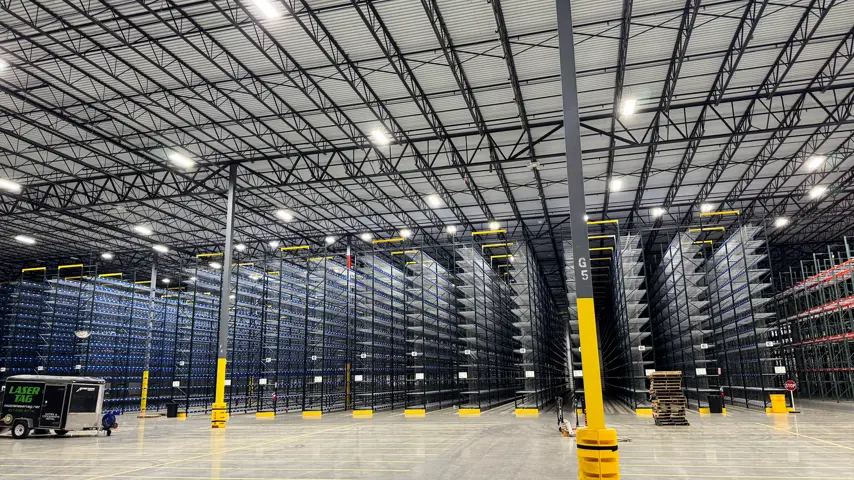
SJF maintains 150,000 square feet of in-stock new pallet rack and component inventory at our Minnesota facility, which lets us turn standard projects fast and engineer custom systems without the lead times most national suppliers run. Whether you're outfitting a new building, expanding capacity, replacing damaged rack, or planning a phased rollout across multiple facilities, we handle the project end to end — no vendor hand-offs, no broker margin layers, no contractors-of-contractors on the install crew.

This page is the category hub for warehouse racking systems — what each rack type is, where it fits, and how SJF builds and installs it. If you're new to pallet racking and want a components-and-sizing primer first, see what is pallet racking? for definitions, dimensions, and a buyer's-eye orientation. If you're planning racking as part of an automated or automation-ready warehouse build, see our storage solutions for automated warehouses for how each rack type integrates with conveyor, sortation, and robotics.
40+ Years In-House Engineering 150,000 sq ft New Inventory 1,000s of Projects Nationwide Install

Types of Warehouse Racking Systems

Most warehouse operations use one of nine racking system types, alone or in combination, depending on selectivity, density, throughput, and SKU profile. Below is a working overview of each — what it does well, where it fits, and how SJF designs, engineers, and installs each one. Every system we build is sized to your specific pallets, products, and building, then engineered, permitted, and inspected before fabrication and install.

Selective Pallet Rack

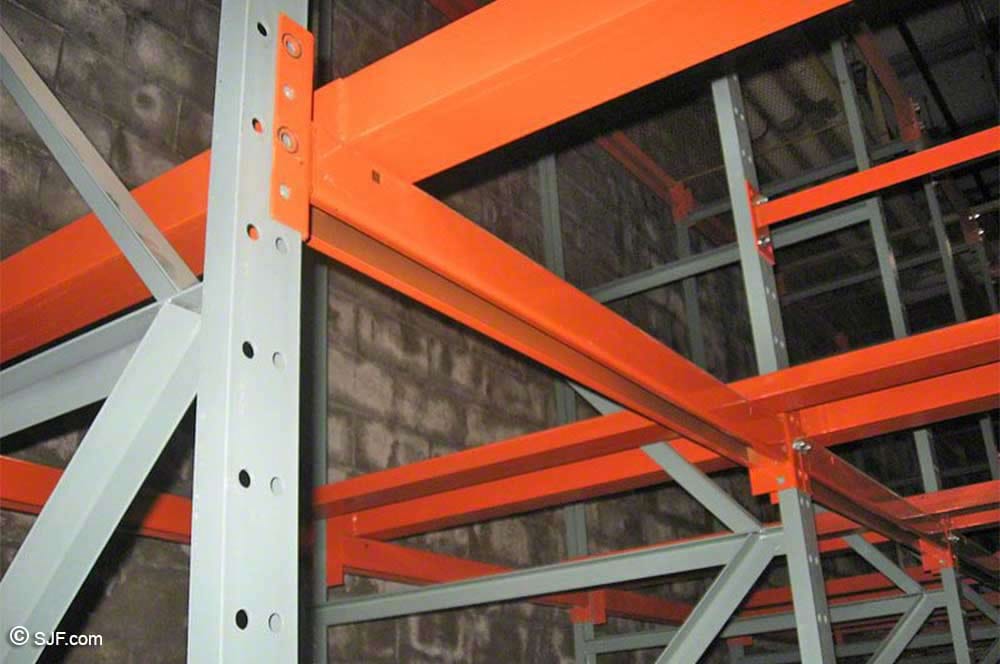
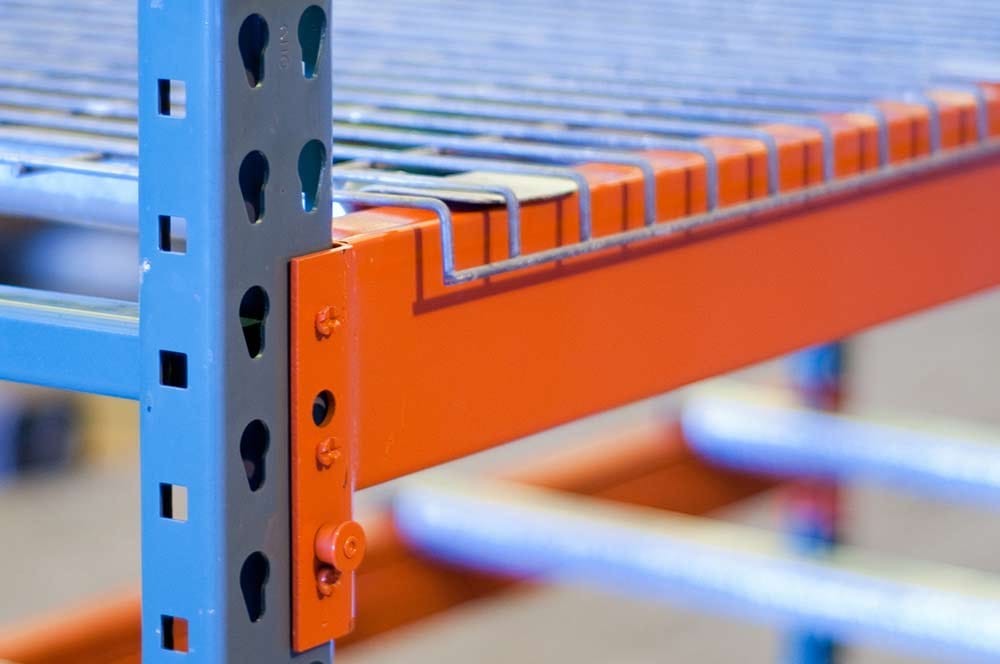
Selective pallet rack — usually built with the industry-standard teardrop connector — is the most common warehouse racking system in North America, with every pallet position directly accessible from the aisle.

Ideal For: Operations with mixed SKUs, frequent picking, unpredictable inventory rotation, or any project where dollar-per-pallet-position economics drive the decision.
Specs:
  • Compatible with all standard counterbalance, reach, and stand-up forklifts
  • Beam capacities typically 4,000-10,000+ lbs per pair, sized to load
  • Heights up to 40+ feet with proper engineering and anchoring
  • Wire decking, row spacers, column protectors, and end-of-aisle guards available
  • Engineered to ANSI MH16.1 / RMI standards
  • Components from Steel King, Interlake Mecalux, Husky, Hannibal, and Ridg-U-Rak

Drive-In Racking

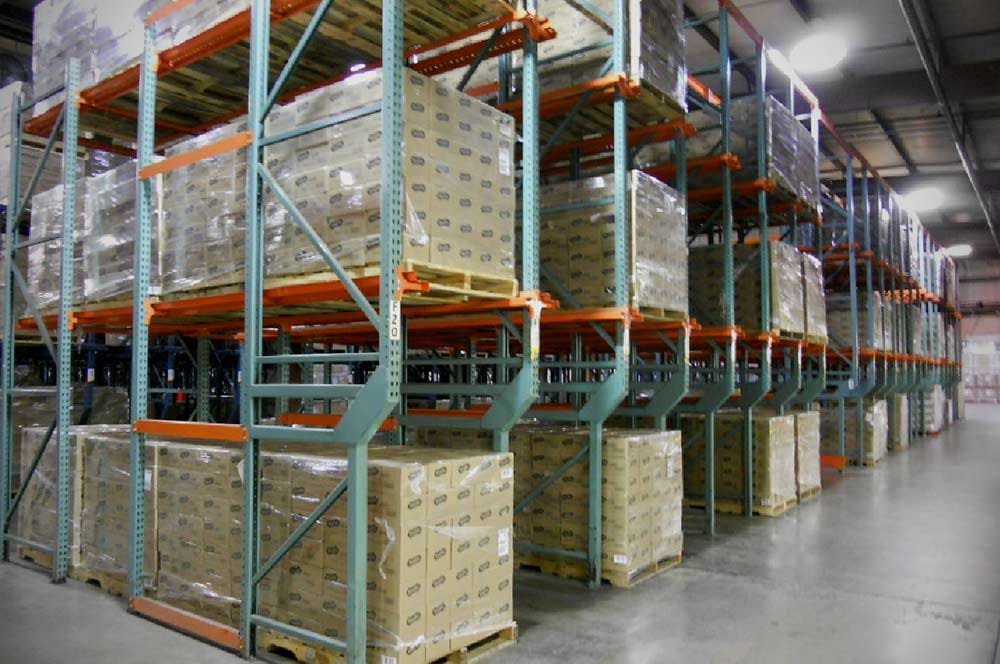
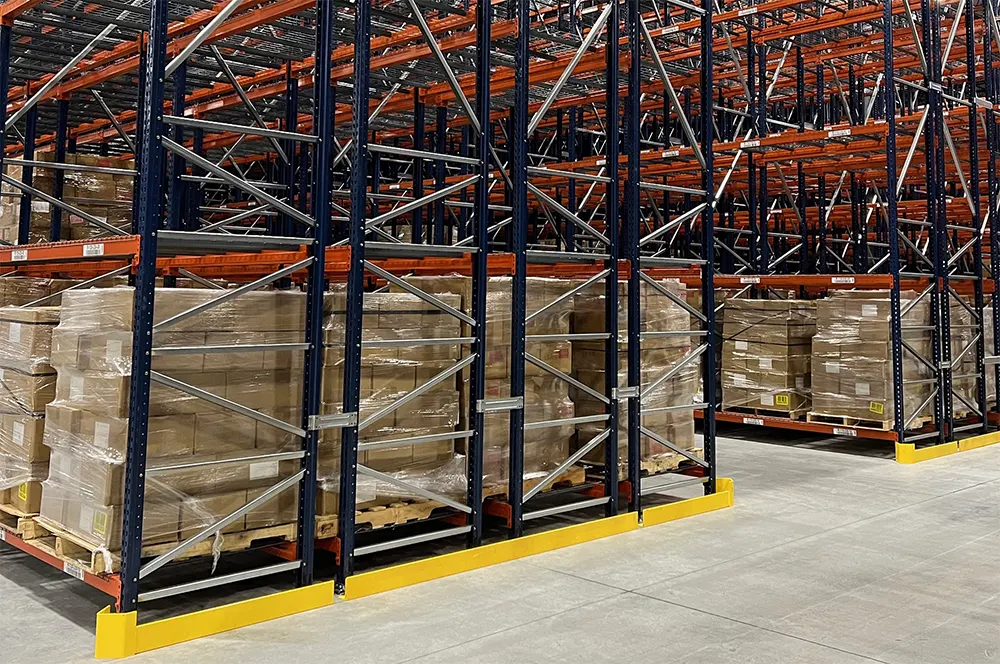
Drive-in rack is a high-density LIFO storage system where forklifts drive directly into the rack bays to load and retrieve pallets, eliminating most aisles in the storage zone.

Ideal For: Bulk storage of uniform products with low SKU count and low rotation — common in cold storage, beverage, dairy, and seasonal inventory operations where density beats selectivity.
Specs:
  • Pallet depth typically 2–10 deep per lane, configured to operation
  • LIFO rotation (last-in, first-out)
  • Up to 75% more pallet positions than selective rack in the same footprint
  • Heavy-duty rail system supports forklift entry into the rack
  • Often combined with selective rack for picking on the front face

Push Back Rack

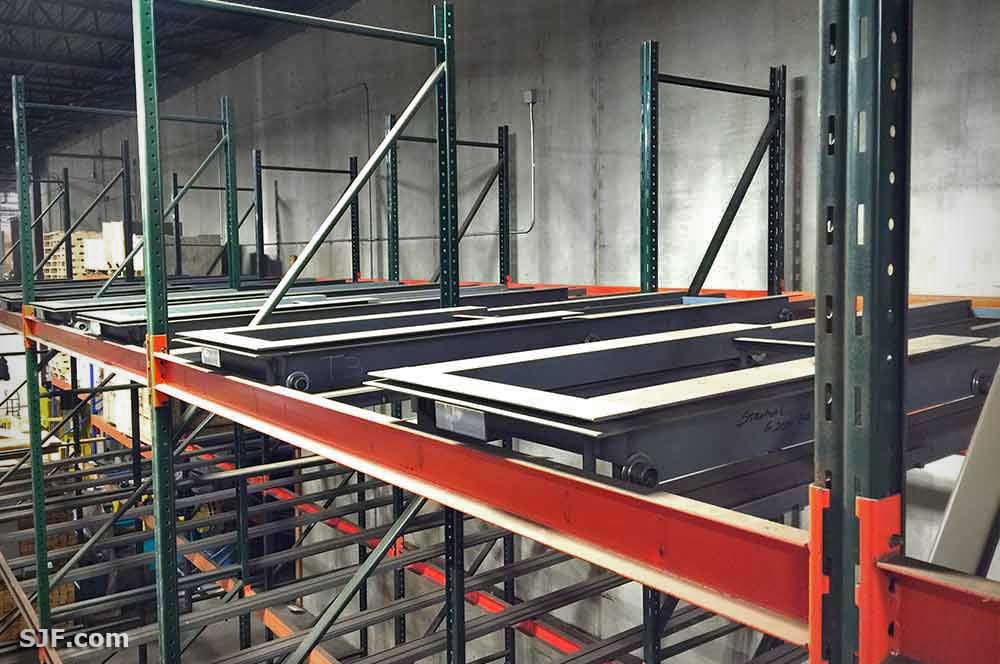
Push back rack uses inclined rails and nested carts so the operator loads from the aisle and the previously loaded pallet rolls back — combining density with independent lane selectivity.

Ideal For: Food and beverage, manufacturing, and 3PL operations with multiple SKUs that need density but don't require true FIFO rotation.
Specs:
  • Pallet depth typically 2–6 deep per lane
  • LIFO rotation, but each lane is independently selectable
  • Up to 60% more pallet positions than selective rack in the same footprint
  • No forklift entry into the rack — loads stay on the carts
  • Compatible with standard counterbalance and reach forklifts

Pallet Flow Rack

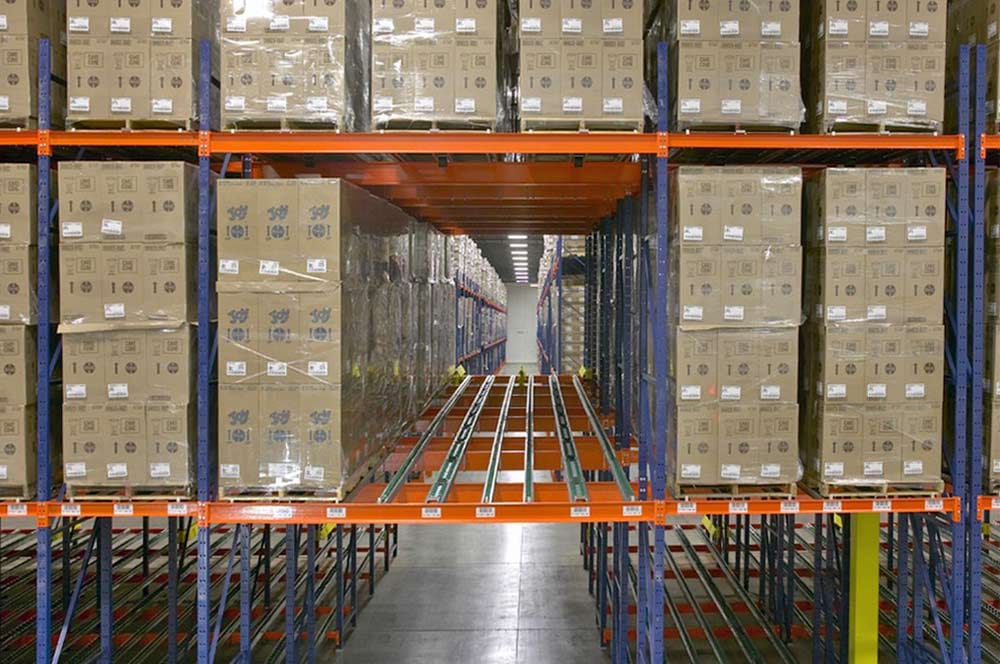
Pallet flow rack is a gravity-fed FIFO system: pallets load on the high end and roll on inclined wheel or roller lanes to a pick face on the other side, with automatic stock rotation built in.

Ideal For: Date-sensitive inventory, high-volume single-SKU storage, and staging zones that need FIFO rotation — common in food, beverage, and pharmaceutical distribution.
Specs:
  • Pallet depth typically 2–20+ deep per lane
  • True FIFO rotation (first-in, first-out)
  • Wheel or roller lanes engineered to pallet weight and quality
  • Speed controllers and lane brakes regulate pallet flow
  • Among the densest rack-based storage systems available

Carton Flow Rack

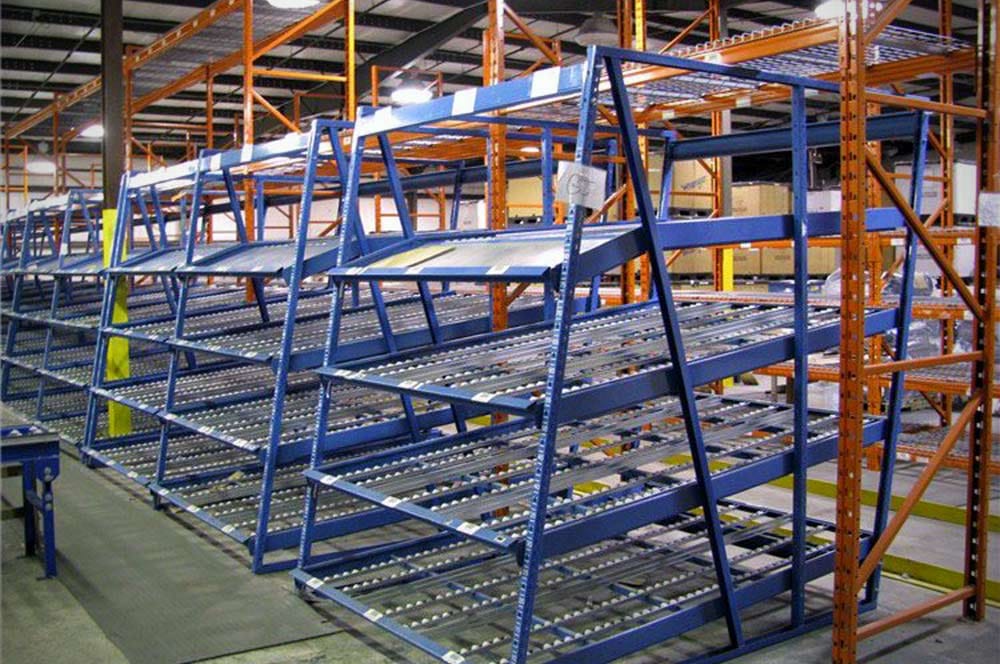
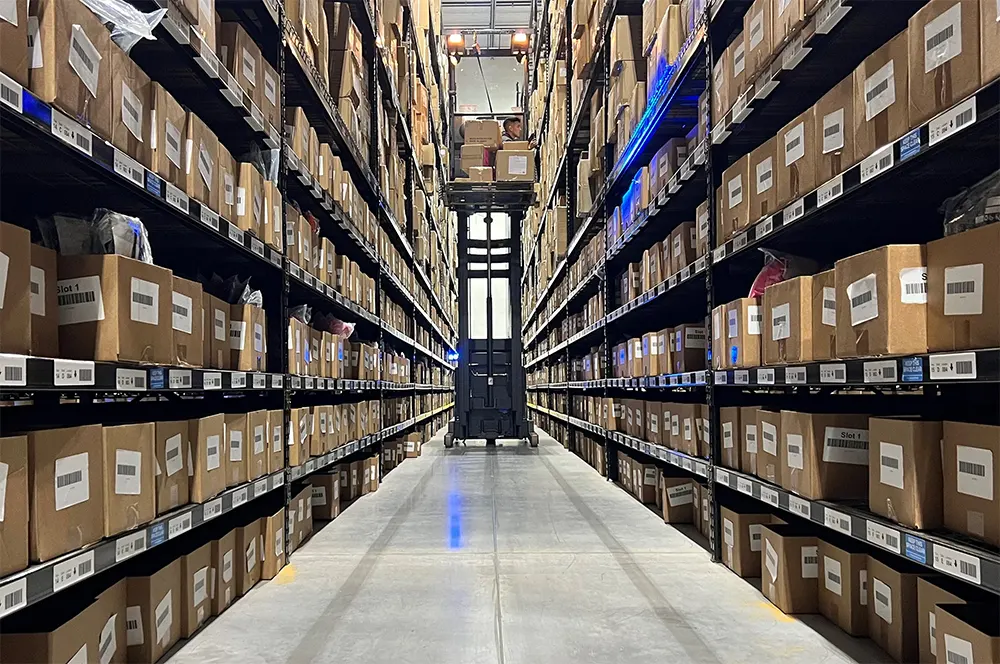
Carton flow rack uses inclined gravity lanes — wheel rails or rollers — to feed cartons, totes, and split cases to a pick face on a FIFO basis, keeping fast-movers presented for high-velocity hand-pick.

Ideal For: E-commerce fulfillment, parts distribution, pick modules, and any operation where high-velocity case-pick or piece-pick speed matters.
Specs:
  • Lane widths configured to specific case or tote dimensions
  • Wheel rails for cartons; full-width rollers for totes
  • Frequently combined with selective rack on lower or upper levels
  • Often integrated into multi-level pick modules with conveyor takeaway
  • Replenishment from the back, picking from the front — operators never reach past slow movers

Double Deep Rack

Double deep rack stores pallets two positions deep back-to-back, cutting aisle requirements roughly in half compared to standard selective rack while keeping each lane independently selectable.

Ideal For: Operations with multiple pallets of the same SKU and a deep-reach forklift already in the fleet, where density gain is worth giving up the rear pallet's direct access.
Specs:
  • Two-pallet-deep lane configuration
  • Up to 60% more pallet positions than standard selective in the same footprint
  • Requires deep-reach or pantograph-equipped forklifts
  • Compatible with most pallet types and weights
  • Lane configurations engineered to specific SKU velocity profiles

Narrow Aisle & VNA Rack

Narrow aisle and VNA racking systems compress aisle widths to recover storage capacity in an existing footprint — paired with specialized lift trucks that operate inside tight clearances.

Ideal For: Operations that have hit a storage ceiling in an existing building where expansion isn't viable, and where 30–50% additional pallet positions justify a specialized lift fleet.
Specs:
  • Narrow aisle: 5–6 ft aisles, served by reach trucks
  • Very narrow aisle: under 6 ft aisles, served by turret, swing-reach, or wire-guided trucks
  • 30–50% storage density gain over standard selective layout
  • Tighter floor flatness specifications (FAA/FAB ratings)
  • Often paired with rail or wire guidance for the lift fleet

Cantilever Rack

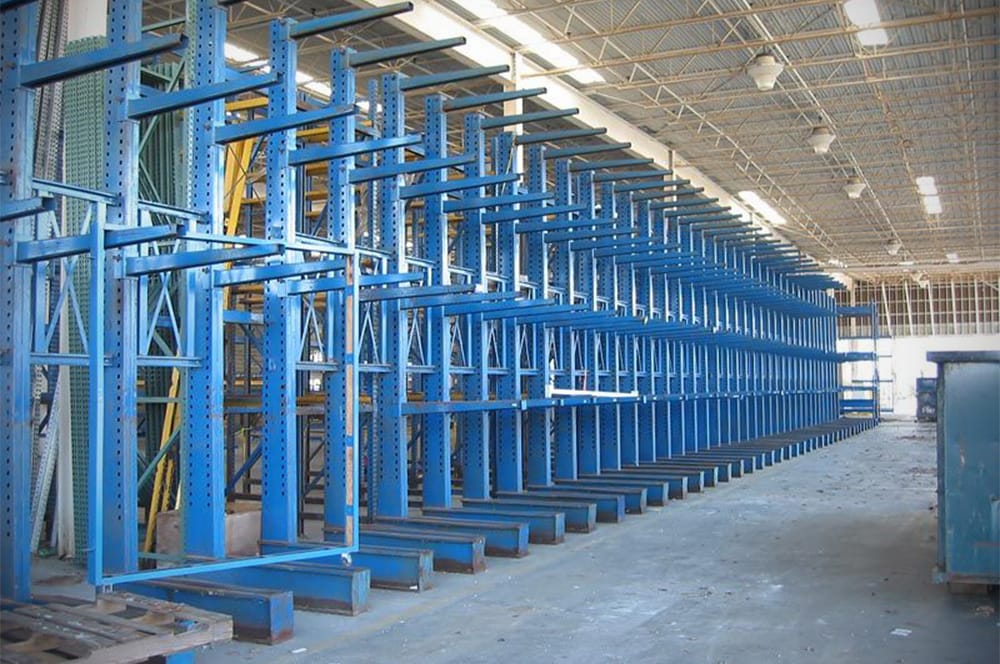
Cantilever rack uses arms extending from vertical uprights to store long, bulky, or irregularly shaped loads that won't fit on standard pallet rack — with no front column to obstruct loading.

Ideal For: Lumber, pipe, conduit, bar stock, sheet goods, furniture, rolled materials, building supplies, and any inventory that doesn't conform to a standard pallet footprint.
Specs:
  • Single-sided or double-sided configurations
  • Indoor or outdoor installations (with optional roof systems for protected outdoor storage)
  • Arm lengths and capacities specified to load
  • Roll-formed cantilever for lighter loads; structural cantilever (Dexco) for heavier loads
  • Open front design for forklift, side-loader, or crane access

Structural Pallet Rack

Structural pallet rack is built from hot-rolled, wide-flange structural steel rather than roll-formed steel — the same material category used in bridges and building construction.

Ideal For: Cold storage, freezer environments, high-traffic dock zones, rack-supported buildings, mezzanines, and pick modules — applications where impact resistance and high load capacity matter more than equipment cost.
Specs:
  • Hot-rolled wide-flange or channel steel construction
  • Significantly higher load capacities than roll-formed selective
  • Bolted connections rather than teardrop or rivet
  • Superior impact resistance for high-traffic and freezer applications
  • Engineered for rack-supported buildings and integrated automation

How to Choose the Right Warehouse Racking System

The right racking system depends on five variables: pallet count and dimensions, SKU count, throughput and pick frequency, ceiling height and column grid, and the lift trucks already in your fleet. SJF's engineers walk through each of these during a free needs assessment and recommend a system — or combination of systems — sized to maximize storage density without compromising the operational flow you actually need.

High Selectivity, Mixed SKUs

If you're picking from many SKUs and inventory rotates unpredictably, selective pallet rack is almost always the right baseline. It's the most economical system, every position is accessible from the aisle, and it scales easily as the operation grows. E-commerce fulfillment, retail distribution, and most 3PL operations run on selective rack — often with carton flow on the pick face for fast movers.

High Density, Limited SKUs

If you're storing large quantities of the same product and selectivity matters less than cubic utilization, drive-in, push back, and pallet flow rack all dramatically increase pallets-per-square-foot. The choice between them depends on rotation: drive-in and push back run LIFO, pallet flow runs FIFO. Cold storage, beverage, food manufacturing, and seasonal inventory operations typically use one of these systems.

Long, Bulky, or Irregular Loads

If you're storing lumber, pipe, sheet goods, or anything that doesn't fit on a standard pallet, cantilever rack is the right system. The arms extend from a vertical column and the open front means no obstruction during load and unload. Available indoor or outdoor, single- or double-sided, with arm capacities sized to the load.

Key Decision Factors

SKU Count & Product Variety

If you're storing many different SKUs and need direct access to all of them, selective rack is almost always the right starting point. Drive-in and pushback rack trade access for density — they work well when you have deep quantities of a small number of SKUs.

Inventory Rotation Method

FIFO (first-in, first-out) rotation requires either selective rack or pallet flow rack — both ensure the oldest stock is picked first. LIFO systems (drive-in, pushback) are acceptable for non-perishable, date-insensitive product where rotation order doesn't matter.

Pick Frequency

High-frequency picking favors selective or pushback configurations — fast-moving product needs to be accessible without shuffling other pallets. Drive-in rack and pallet flow rack are better suited for slower-moving bulk storage where entire lane quantities are pulled at once.

Forklift Type & Aisle Width

Standard counterbalance forklifts require wide aisles (10′–13′). Narrow-aisle reach trucks can operate in 8′–10′ aisles and are commonly paired with selective rack to maximize floor space. Drive-in rack requires a forklift rated to drive into the structure — not all equipment is compatible.

Not sure which system fits your operation? Talk to an SJF specialist — we'll ask the right questions and give you a straight answer.

Engineered Systems, New Components, and Procurement Options

Engineered & Custom Systems

The majority of SJF projects are engineered systems — designed from scratch to fit your specific building, loads, throughput, and code environment. Our in-house engineers handle layout and CAD design, structural calculations, seismic and high-pile combustible storage analysis, stamped drawings, and permit coordination. Engineered systems are the right approach for new builds, expansions, retrofits, rack-supported buildings, freezer environments, mezzanines, pick modules, and any application where standard rack configurations don't fit. Engineering and design are included with most equipment quotes.

Request a Free Layout & Quote →

New Pallet Rack & Component Inventory

SJF maintains 150,000 square feet of in-stock new pallet rack, cantilever rack, and component inventory — uprights, beams, wire decking, row spacers, column protectors, and anchors — from major U.S. manufacturers, including one of the largest in-stock inventories of Interlake Mecalux welded frames in the country. In-stock inventory means we move fast on standard projects (often shipping the same week) and we keep custom-engineered builds on schedule by sourcing standard components from our own warehouse rather than waiting on factory lead times.

Shop New Pallet Rack →

For projects where budget is the primary constraint, SJF also maintains a separate inventory of used pallet rack, cantilever rack, and storage system components. Used inventory is engineered, inspected, and quoted as its own track — see our used pallet rack hub for details and current availability.

Warehouse Racking vs. Warehouse Shelving — What's the Difference?

Warehouse racking and warehouse shelving solve different problems. Racking is engineered to store palletized loads — typically thousands of pounds per beam level — accessed by forklift, and built with vertical uprights and horizontal load beams. Shelving is built for hand-pick storage of smaller items, usually under a few hundred pounds per shelf, and accessed by a person standing on the floor or a rolling ladder. Many operations use both: pallet rack for bulk and reserve storage, with shelving or carton flow on a pick face for case and piece picking. If you're storing pallets, you need racking. If you're storing parts, totes, or hand-pickable cases, you may need shelving — or a hybrid pick module that combines the two.

Warehouse Racking Systems by Industry

SJF designs and installs warehouse racking systems for operations across nearly every sector that moves product. Our project portfolio includes e-commerce fulfillment centers, third-party logistics (3PL) operations, food and beverage distributors, cold storage facilities, retail and B2B warehouses, manufacturing plants, and crossdock operations. Each industry has a different SKU profile, throughput target, and regulatory environment — and the right racking system reflects that.

E-Commerce Fulfillment

Selective rack, carton flow, and pick modules sized for high-velocity case picking.

3PL & Third-Party Logistics

Mixed-SKU selective rack and reconfigurable systems for changing client mix.

Food & Beverage

High-density push back, drive-in, and pallet flow systems for FIFO/LIFO rotation.

Cold Storage

Structural rack and freezer-rated systems built for impact and temperature extremes.

Retail & B2B Warehouses

Selective rack, mezzanines, and case pick configurations.

Manufacturing & Crossdock

Heavy-duty pallet rack, cantilever for raw materials, and integrated conveyor.

Full-Service Racking System Design, Engineering & Installation

Most rack suppliers stop at the loading dock. SJF doesn't. Every racking project we take on includes warehouse layout and design, structural engineering with stamped drawings where required, permit submittal and code coordination, equipment supply, factory-trained installation, and a final inspection to ANSI MH16.1 and RMI standards. You work with one project manager from kickoff to closeout — not a supplier, a separate engineer, a separate installer, and a separate inspector.

For most projects, the engineering and design work is included with the equipment quote. We measure the building, lay out the rack, run capacity calculations against your pallet weights and seismic zone, produce stamped drawings, and pull permits if your jurisdiction requires them. Installation is performed by SJF's own crews or our vetted regional install partners — never by subcontracted day labor — and projects are inspected to within 1/8 inch on plumb and level.

Warehouse Design & Layout

Free needs assessments and CAD layouts that maximize pallet positions within your existing building footprint. Read more about warehouse design and layout services →

Engineering & Permitting

Licensed engineers, stamped drawings, seismic calculations, and permit coordination — handled in-house so your project doesn't stall waiting on third-party submittals.

Installation & Inspection

Factory-trained installation crews, ANSI/RMI-compliant assembly, and a final inspection that verifies rack is plumb and level to within 1/8 inch. See equipment installation services →

Frequently Asked Questions

  • How much does a warehouse racking system cost?

    Pallet rack pricing is driven by pallet position count, beam capacity, upright height, system type, and the engineering and installation scope. High-density systems (drive-in, push back, pallet flow) typically cost more per position than selective rack but store more pallets per square foot, often producing a lower total cost per cubic foot stored. The right comparison is cost per pallet position in context — not equipment price alone. SJF provides itemized quotes based on your specific layout — engineering, design, and permit coordination are included with the equipment quote on most projects.

  • What types of warehouse racking systems are there?

    The most common warehouse racking systems are selective pallet rack, drive-in rack, push back rack, pallet flow rack, carton flow rack, double deep rack, narrow aisle and VNA rack, cantilever rack, and structural pallet rack. Selective rack is the most widely used because every pallet is directly accessible from the aisle. The other systems trade selectivity for storage density, throughput speed, or load-type compatibility. The right choice depends on SKU count, pallet rotation pattern, throughput, ceiling height, and the lift trucks in your fleet.

  • How do I know which racking system is right for my warehouse?

    The right system is determined by five factors: pallet count and dimensions, SKU count, pick and replenishment frequency, ceiling height and column grid, and the lift trucks already in operation. SJF's engineers run a free needs assessment that walks through each variable and recommends a system — or combination of systems — that maximizes storage density without disrupting operational flow. Most facilities end up with a hybrid: selective rack for the bulk of pallet positions, with a high-density section for slow-moving SKUs or a carton flow zone for fast pick.

  • Can SJF design and install the racking system, or just sell the equipment?

    SJF is a full-service integrator, not just a supplier. Every racking project includes warehouse layout and design, structural engineering with stamped drawings where required, permit submittal, equipment supply, factory-trained installation, and a final ANSI/RMI inspection. Clients work with a single project manager from initial assessment through closeout — there's no need to coordinate separate engineers, installers, or inspectors.

  • What does SJF's full-service installation actually include?

    A full-service rack installation from SJF includes warehouse layout and CAD design, structural engineering with stamped drawings where required, seismic and high-pile combustible storage analysis, permit submittal and municipal code coordination, equipment supply, factory-trained installation, and a final inspection to ANSI MH16.1 and RMI standards — all managed by a single project manager. Clients don't coordinate a supplier, an engineer, an installer, and an inspector separately. Engineering and design are included with the equipment quote on most projects, with no separate consulting fee.

  • Does SJF handle permitting and stamped drawings, or do I need a separate engineer?

    SJF handles both, in-house. Most jurisdictions require stamped engineering drawings, structural calculations, anchor specifications, and (for high-pile storage) a fire life safety plan before a rack permit is issued. Our licensed engineers produce all of these as part of the standard project workflow, so clients don't need to hire a separate structural engineer or fire protection consultant. We also coordinate directly with municipal building departments on permit submittal and inspection scheduling, which keeps projects moving instead of stalling at the city counter.

  • How long does it take to install a warehouse racking system?

    Timeline depends on system complexity, engineering scope, permitting requirements, and whether components are in-stock or require custom fabrication. Standard configurations using SJF's in-stock inventory move faster than engineered systems requiring custom fabrication. Engineering, permitting, and any municipal review typically run in parallel with fabrication to avoid extending the schedule. SJF also schedules around active operations — including weekend, overnight, and phased installs — when warehouse downtime is not an option. Contact us for a timeline estimate specific to your project.

  • Does SJF ship racking systems nationwide?

    Yes. SJF ships from multiple distribution points across the U.S. and installs racking systems in all 48 contiguous states. Our installation crews and vetted regional install partners cover every major metro and most secondary markets. Whether you're in Minneapolis, Atlanta, Phoenix, or anywhere in between, we manage logistics, freight, and on-site installation as a single project.

Ready to Design Your Warehouse Racking System?

Whether you're outfitting a new building, expanding an existing operation, replacing damaged rack, or planning a phased rollout across multiple facilities, SJF's racking specialists can scope your project, recommend the right system, and quote it. Engineering, layout, and permit coordination are included on most projects, and there's no obligation to move forward.

Planning automation alongside your storage system? See storage solutions for automated and automation-ready warehouses for how each rack type integrates with conveyor, sortation, and robotics.