What Is Pallet Racking? A Complete Guide to Types, Components, and Sizing

Pallet Racking Definition

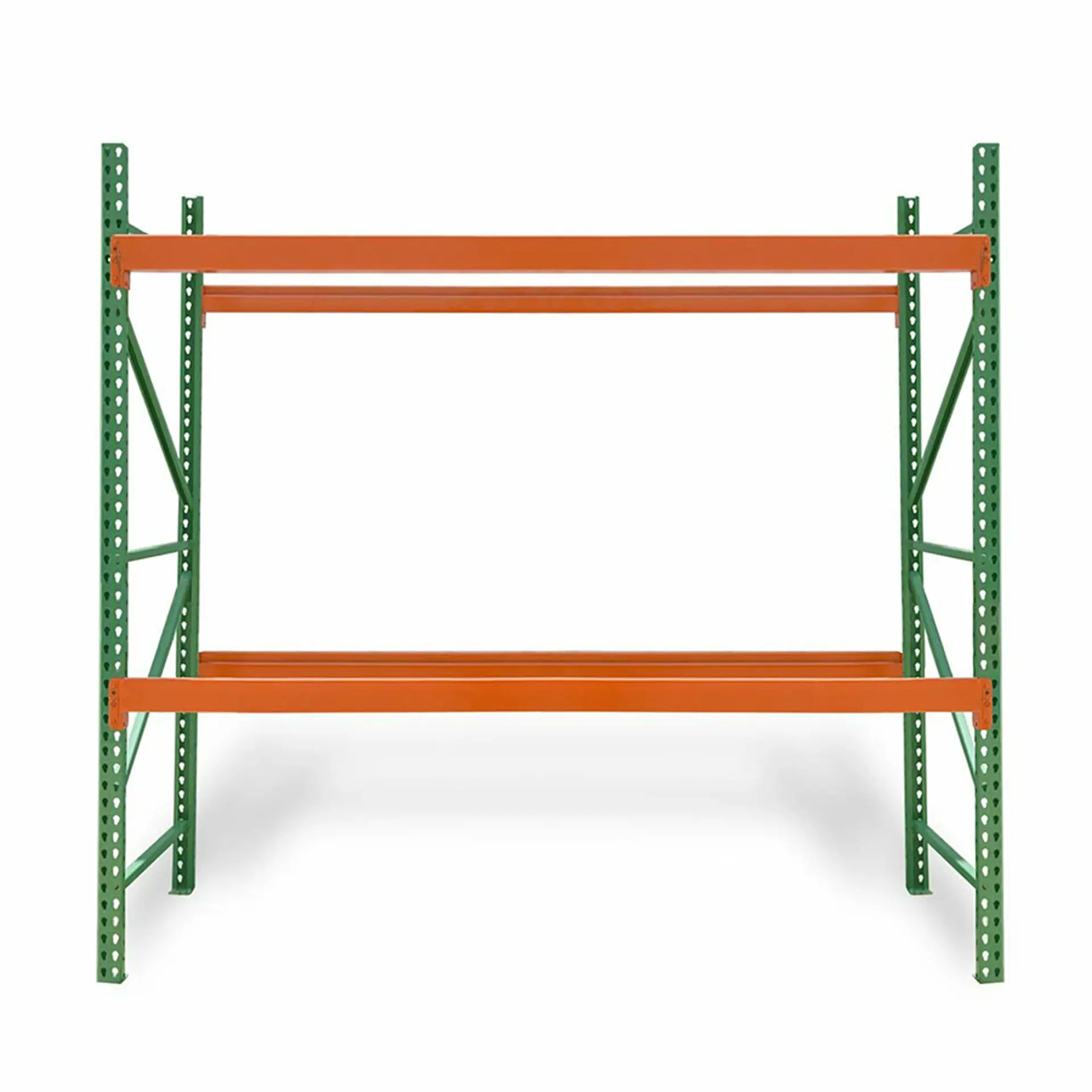
Pallet racking is a warehouse storage system built from vertical steel uprights and horizontal load beams — designed to store palletized goods in multiple levels and rows, making full use of vertical space that would otherwise go unused. It's the most widely used storage solution in commercial warehouses, distribution centers, and fulfillment operations in the U.S., and it comes in several configurations depending on how product is stored, accessed, and rotated.

The most common construction style is teardrop pallet racking, where beams slide into teardrop-shaped holes in the uprights and lock without bolts — making it easy to assemble, adjust, and expand. Teardrop components are used across the most popular storage configurations: selective rack for direct access to every pallet, drive-in rack for high-density storage, pushback rack for multiple pallets deep per lane, and pallet flow rack for first-in, first-out rotation.
Talk to a Specialist

SJF Material Handling has been designing, supplying, and installing pallet racking systems for over 40 years. We stock new and used pallet rack across all major styles and configurations — if you'd rather talk through your options than read a guide, we're here.

What Are the Parts of a Pallet Rack System?

Pallet rack broken down by component

Pallet rack beams are the heavy duty rails that connect the uprights together and create the shelves of the pallet rack. The beams also determine the width of the structure. Beams are available in many lengths and heights to accommodate weight and dimension requirements of stored materials. Beams are also available in two different styles - step beam style or box beam style. The style of beam allows for the use of optional supports or wire decking.

Pallet rack beams can be adjusted to whatever height from the ground is needed and can be easily removed and readjusted to a different level for future changing needs.

Pallet rack uprights (aka pallet rack columns or upright frames) are the side supports for the structure. They determine the height and depth of the pallet racking system. Uprights are available in many different heights, widths and post sizes to support a variety of weight and capacity requirements.

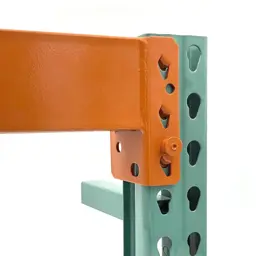
Pallet rack connections are different depending on brand. The most common is the teardrop connection as shown in the following image. Other styles include Structural, T-Bolt, Ridg-u-Rak, and more. To view all different types of pallet rack connections visit our rack types guide.

Teardrop pallet rack connection

Common Pallet Rack Sizes and Dimensions

Pallet racking is sized around two primary components — uprights and beams — and selecting the right dimensions for each depends on what you're storing, what equipment you're using to access it, and how your building is laid out. For a full breakdown of how beam dimensions affect load ratings, see our guide to understanding pallet rack load ratings.

Uprights

Upright frames set the height and depth of the system. SJF stocks uprights in seven standard heights: 96", 120", 144", 168", 192", 216", and 240" — spanning 8 to 20 feet. The most common ceiling-to-rack height in commercial warehouses falls between 144" and 192" (12'–16'). Upright depth — the front-to-back dimension — is typically 42" for standard 48"-deep pallets, though SJF also stocks 24", 36", and 48" depths for different pallet profiles and storage configurations.

Beams

Beams determine the width of each bay and the weight each shelf level can carry. SJF stocks beams in lengths of 48", 60", 96", 108", 120", 132", 144", and 168". The most common bay widths for two-pallet-per-level selective racking run between 96" and 144". Beam capacity varies significantly based on beam height and length — across SJF's inventory, rated capacities range from 2,650 lbs. to 9,920 lbs. per pair.

Types of Pallet Racking

Pallet racking comes in several configurations, each designed for a different balance of storage density, product access, and inventory rotation. The right type depends on your SKU count, how often you cycle product, and what equipment you're running.

Selective Pallet Rack

The most widely used configuration in the U.S. Every pallet position is directly accessible from the aisle — no other pallets need to be moved to reach it. Best suited for warehouses with a wide variety of SKUs or product that needs to be accessed frequently.

View Selective Rack →

Drive-In Rack

Forklifts drive directly into the rack structure to load and unload pallets, storing multiple pallets deep per lane. Maximizes cubic storage density at the cost of direct access — operates on a last-in, first-out (LIFO) basis, making it best for single-SKU bulk storage.

View Drive-In Rack →

Pushback Rack

Pallets load onto nested carts that ride on inclined rails, allowing 2–5 pallets deep per lane. When a pallet is removed from the front, the ones behind it automatically roll forward. Offers higher density than selective rack while maintaining lane-level LIFO access.

View Pushback Rack →

Pallet Flow Rack

Pallets load from the back and flow forward on gravity-fed roller lanes, automatically presenting the oldest pallet at the pick face. Operates on a first-in, first-out (FIFO) basis — the right choice for date-sensitive or perishable product that requires strict rotation.

View Pallet Flow Rack →

Structural Pallet Rack

Built from hot-rolled structural steel channels and bolted together rather than clipped. Handles higher impact loads and harsher environments than standard teardrop systems — common in freezer applications, automated storage, and facilities with heavy forklift traffic.

View Structural Rack →

How to Choose the Right Pallet Rack System

No single rack type is the right answer for every warehouse. These four factors determine which configuration fits your operation — and where the tradeoffs are.

SKU Count & Product Variety

If you're storing many different SKUs and need direct access to all of them, selective rack is almost always the right starting point. Drive-in and pushback rack trade access for density — they work well when you have deep quantities of a small number of SKUs.

Inventory Rotation Method

FIFO (first-in, first-out) rotation requires either selective rack or pallet flow rack — both ensure the oldest stock is picked first. LIFO systems (drive-in, pushback) are acceptable for non-perishable, date-insensitive product where rotation order doesn't matter.

Pick Frequency

High-frequency picking favors selective or pushback configurations — fast-moving product needs to be accessible without shuffling other pallets. Drive-in rack and pallet flow rack are better suited for slower-moving bulk storage where entire lane quantities are pulled at once.

Forklift Type & Aisle Width

Standard counterbalance forklifts require wide aisles (10′–13′). Narrow-aisle reach trucks can operate in 8′–10′ aisles and are commonly paired with selective rack to maximize floor space. Drive-in rack requires a forklift rated to drive into the structure — not all equipment is compatible.

Not sure which system fits your operation? Talk to an SJF specialist — we'll ask the right questions and give you a straight answer.

Pallet Rack How-To Videos

Short guides from SJF's team on how to measure uprights and beams so you order the right sizes the first time.

How to measure pallet rack uprights — height, depth, and post size explained.

Beam measurements and load capacities — what to know before you buy.

New vs. Used Pallet Rack

Used pallet rack is one of the most cost-effective storage investments available — and SJF carries one of the largest inventories of used teardrop pallet rack in the U.S. Because teardrop components are cross-compatible across most major brands, used uprights and beams from different manufacturers typically work together without issue.

Used rack makes the most sense when you have flexible sizing requirements, a standard storage environment, and standard forklift access. New rack is the better call when you need specific load ratings, custom dimensions, or components for a high-impact or freezer environment where used inventory may not be available in the right specs.

SJF stocks both. Browse our used pallet rack inventory or call (320) 485-4974 to ask what's in stock.

Frequently Asked Questions

  • What is pallet racking?

    Pallet racking is a storage system made up of vertical steel uprights and horizontal load beams that create multiple shelf levels for storing palletized goods. It's the primary storage structure in commercial warehouses, distribution centers, and fulfillment operations — designed to maximize vertical space while keeping product accessible by forklift.

  • What is warehouse racking?

    Warehouse racking is a broad term for any industrial shelving or storage structure used to organize goods in a warehouse. Pallet racking is the most common type, but warehouse racking also includes cantilever rack for long or irregularly shaped materials, carton flow rack for case picking, and shelving systems for hand-stacked items.

  • How does pallet racking work?

    Uprights are anchored to the floor and beams clip into them at adjustable heights, creating open shelf bays. Pallets are loaded and unloaded by forklift from the open front of the rack. The beam height and spacing are set based on the height of the loads being stored — and both can be adjusted as needs change.

  • What are the different types of pallet racking?

    The most common types are selective pallet rack (direct access to every pallet), drive-in rack (forklifts enter the structure for high-density LIFO storage), pushback rack (2–5 pallets deep per lane on gravity carts), pallet flow rack (FIFO gravity-fed lanes), and structural pallet rack (heavy-duty bolted construction for high-impact environments). Teardrop is the most common connection style used across selective, drive-in, and pushback systems.

  • What is teardrop pallet racking?

    Teardrop pallet racking refers to the connection style between beams and uprights — beams have hook clips that lock into teardrop-shaped holes punched into the upright column. The connection requires no bolts and can be adjusted by hand. It's the most widely used design in the U.S. because components from different manufacturers are typically interchangeable.

  • How much weight can pallet racking hold?

    Capacity varies based on upright gauge, beam length, and beam height. Across SJF's inventory, beam pairs are rated from 2,650 to 9,920 lbs., and upright frame capacities typically run from 15,000 to 30,000 lbs. per pair depending on post size and height. Always use the manufacturer's rated capacity for your specific components — do not exceed it.

  • What size pallet racking do I need?

    Upright height is determined by your clear ceiling height minus clearances for sprinklers, lighting, and HVAC — most facilities land on uprights between 144" and 192". Upright depth is typically 42" for standard 48"-deep GMA pallets. Beam length is based on how many pallets wide each bay will be: two GMA pallets side-by-side require a minimum 96" beam, with 108" or 144" being more common.

  • What is a pallet rack bay?

    A bay is one vertical section of racking — the space between two uprights, including the beams that span between them. Starter bays include two uprights; add-on bays share an upright with an adjacent section to reduce cost and footprint. Bay width is set by beam length; bay height is set by upright height.