Storage

'

Storage as the Foundation of Warehouse Automation

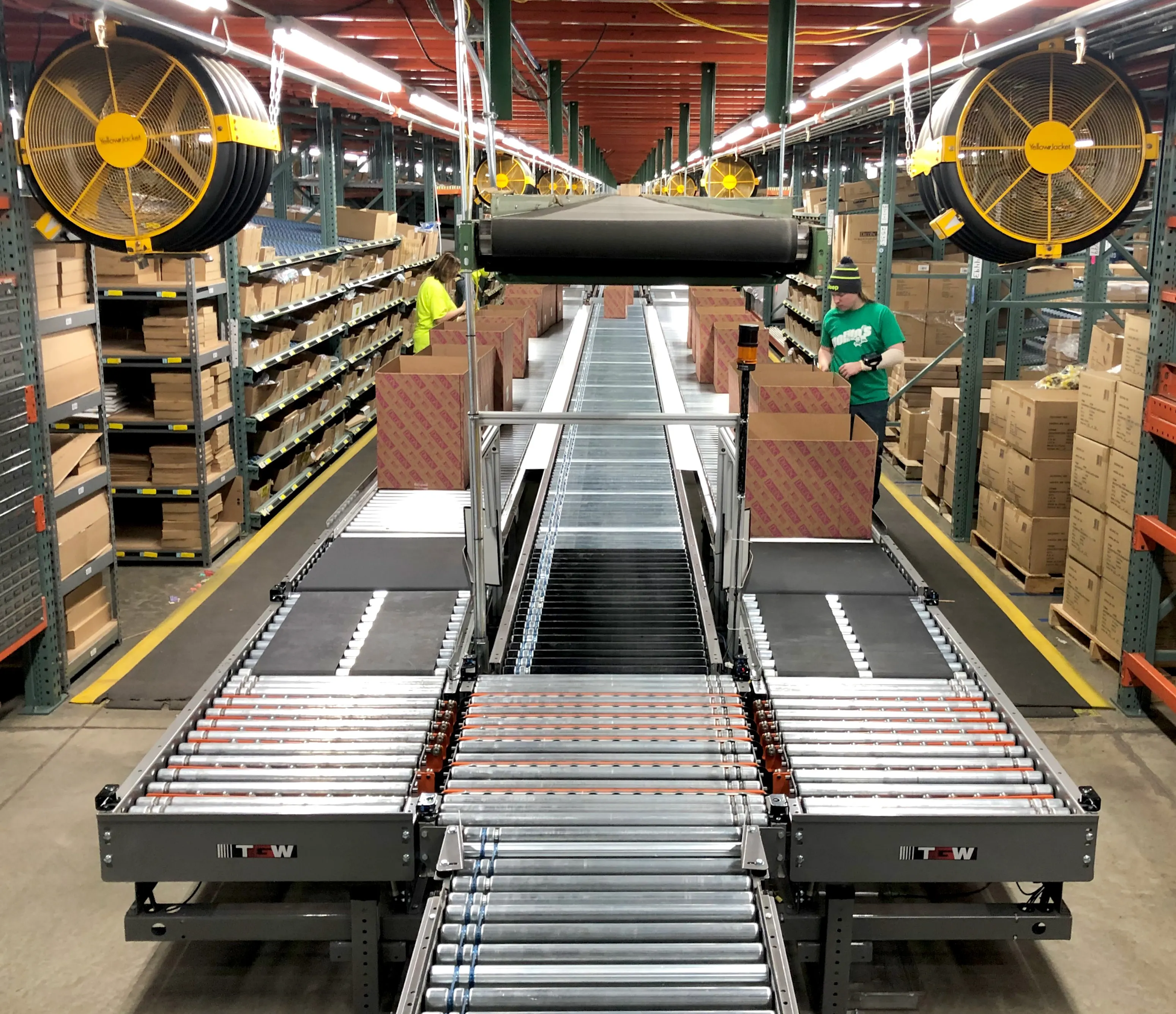
Most warehouse automation conversations start with the visible technology — robots, conveyor, goods-to-person workstations, autonomous mobile vehicles. But automation actually starts further upstream, in the storage layer. The pallet rack, shuttle channels, carton flow, and pick faces installed today determine which automation options are available next year, in five years, and in ten — and how much rework is required when an operation moves from manual to assisted to fully integrated.

Automated and semi-automated systems depend on tolerances that manual racking doesn't have to meet. AGVs, AMRs, vision-guided forklifts, and pallet shuttles need consistent upright spacing, predictable beam elevation, and tight clearance control to navigate reliably. A rack system installed to within 1/8 inch on plumb and level supports automation; a rack system that's "close enough" for forklift operators usually doesn't. The same is true for floor flatness, bay-width consistency, and load-beam deflection — small variances that don't matter to a human driver create reliability issues for a robot.

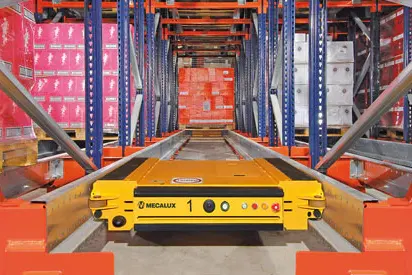
SJF Material Handling designs and integrates storage systems for warehouses across the full automation spectrum — from operations adding their first conveyor segment to fully integrated buildings running goods-to-person picking, AS/RS, and pallet shuttle storage.
Benefits & Features

  • Versatility
    Warehouse storage comes in many styles and sizes, making it easy to accomodate your specific needs
  • Space Optimization
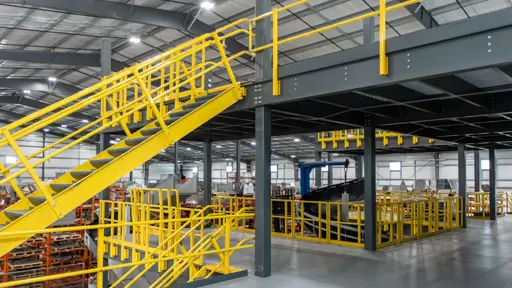
    Design to maximize the use of available space using solutions such as vertical storage, high-density storage, narrow aisles, etc.
  • Adaptability
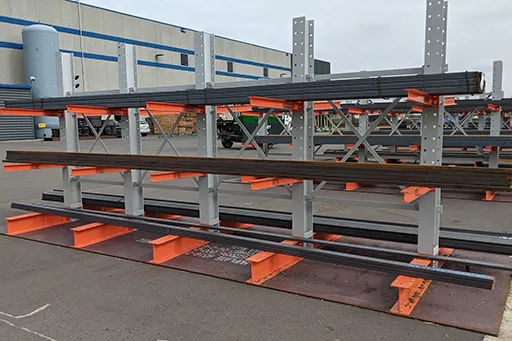
    Whether storing wood, plastic, or metal, there is a solution that adapts to various industries and needs
  • Accessibility
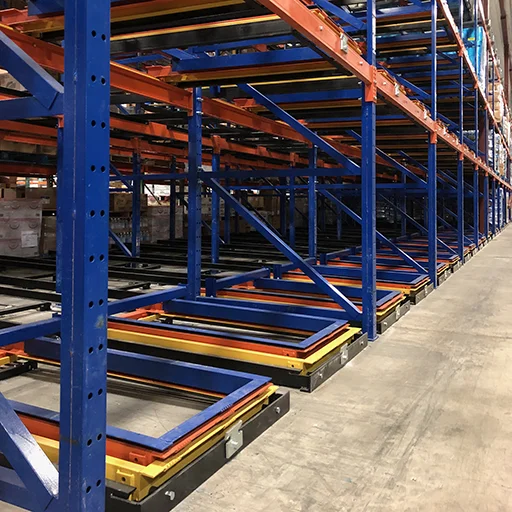
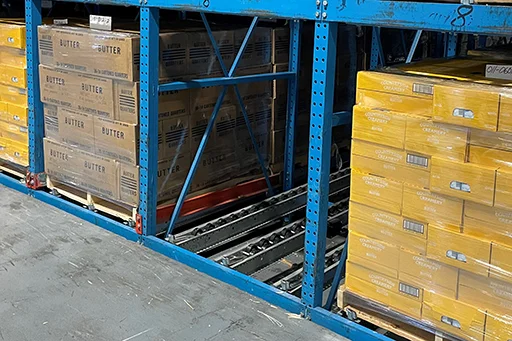
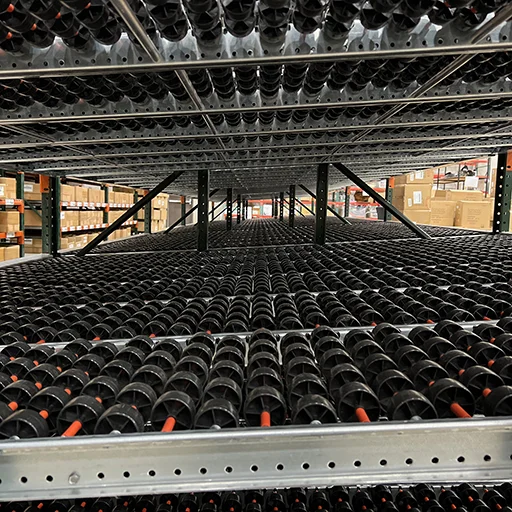
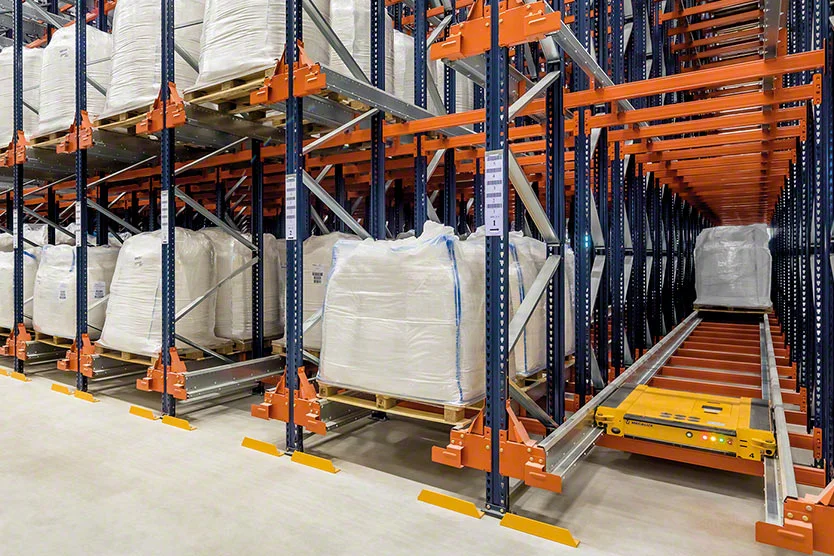
    Different solutions have different methods of product accessibility. Selective, FIFO (First In, First Out), and LIFO (Last In, First Out) are all common methods of accessibility
  • Scalability
    Storage systems can easily be expanded or modified to accommodate changing storage needs

Storage Overview

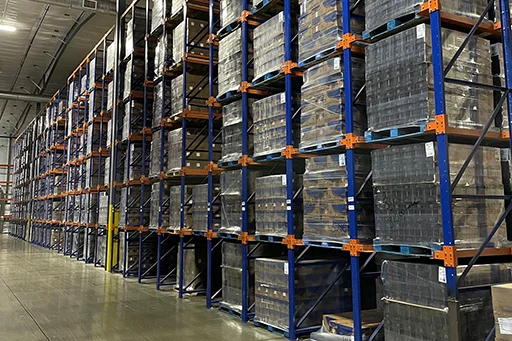
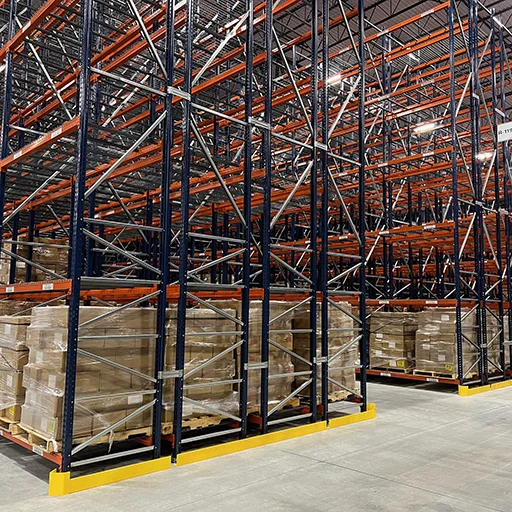
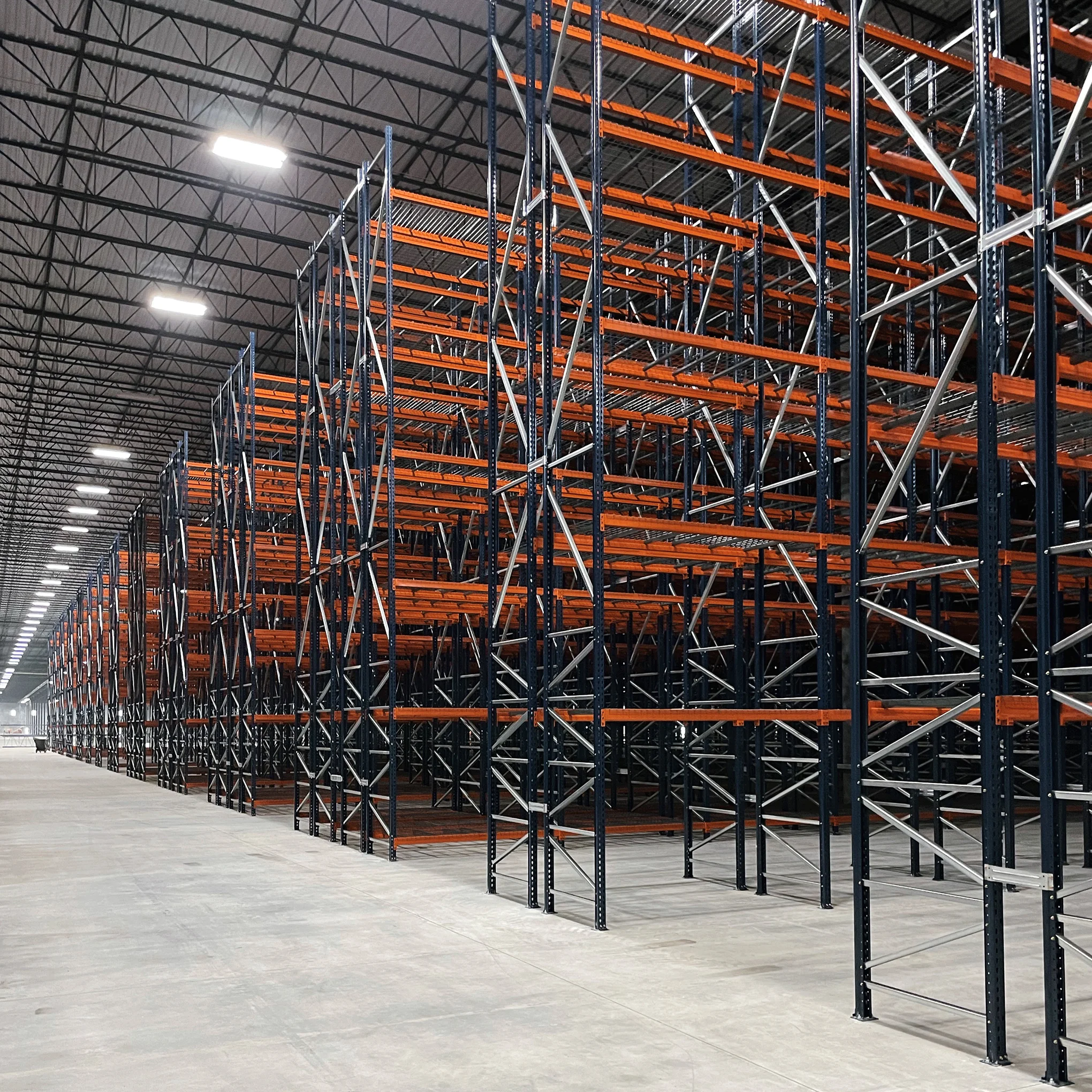
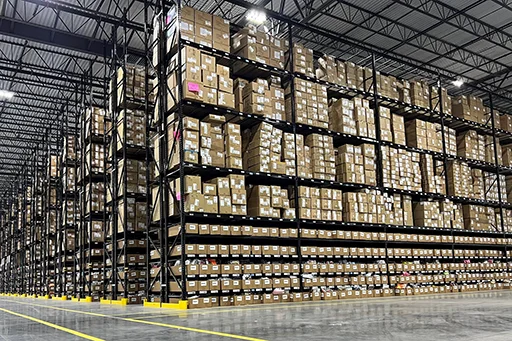
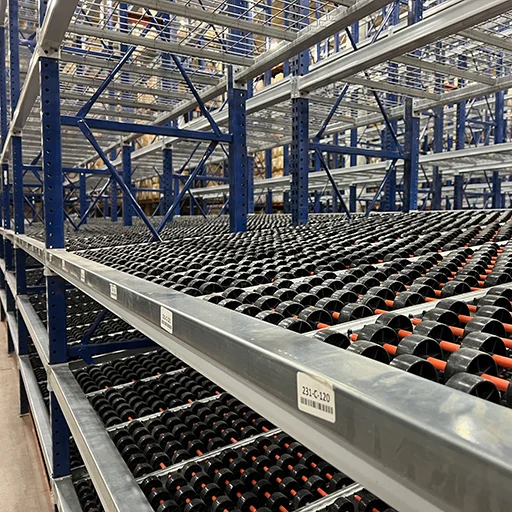
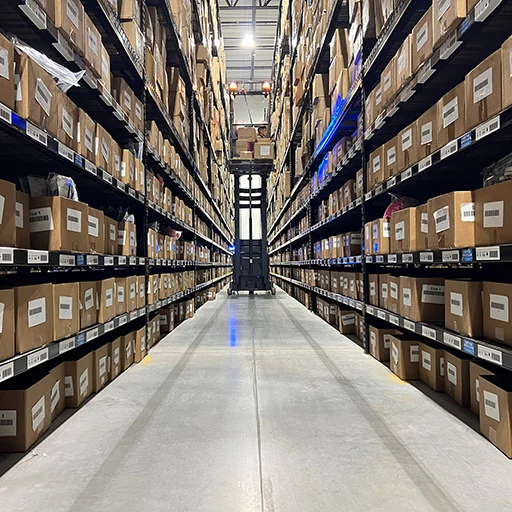
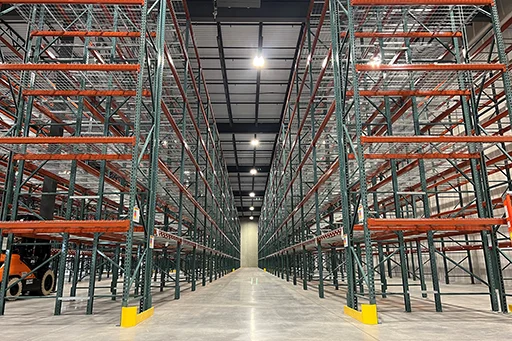
The most common method for storing materials within a warehouse or manufacturing facility is pallet rack. Most often, storage of materials begins with static material staging on the floor. Pallet rack allows the ability to make use of the empty space above the floor, by creating rows of storage and adding one or more levels. The result is an increase in storage capacity, and product accessibility.

The name pallet rack comes from its original designs to store materials which are placed on pallets. Pallets are loaded onto fork trucks and loaded onto the rack. Today, pallet rack comes in a variety of different designs. These designs differ from the type of material being stored, density of storage, and product accessibility.

Frequently Asked Questions

  • How do we select the best design for your needs?

    The first element in determining the proper rack design is knowing the characteristics of product. Storage often requires more than one design for efficient utilization of space and accessibility. Identify how you are storing your product as well as how you are picking it, they may differ. Product can be stored as each units, cartons, pallets, skids, rolls or cartons that are palletized, however may be picked as full carton, pallet load, or as single units from a carton.

    A second element to determining design is product accessibility. Consider the amount of inventory turns, or whether or not the product has any expiration. If product requires a that has higher turn or needs to be picked based on age, will require more accessibility.

    The third element is taking the different product broken down into its characteristics and determine how much product to store. By combining the amount of storage required and the storage characteristics, we can determine the amount of space required for each product. Analyzing the amount of building space available and product space required, storage can be designed for more accessibility or more product density.

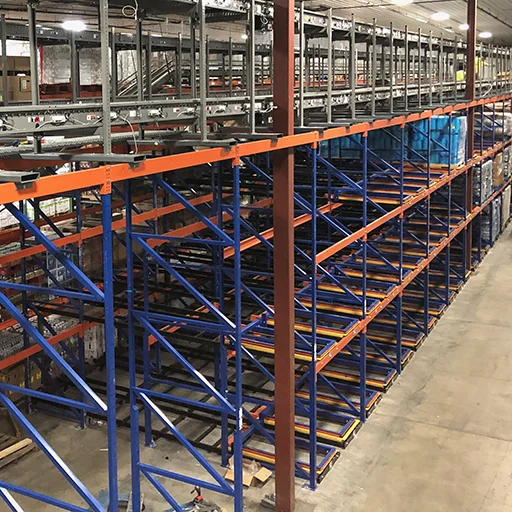
    Some examples of different storage methods and their uses are listed above. SJF's team of solutions specialists can help in recommending the best design to provide optimal storage and utilization.

  • How wide does my aisle need to be for pallet racking?

    Aisle width requirements are determined by the style of forklift being used. A rule of thumb would be 6' aisles for VNA/wire guided trucks, 9'6\" for stand up reach trucks, and 12' for traditional sit down forklifts. The aisle width would need to be finalized once lift equipment is confirmed.

  • What is required for permitting pallet rack?

    Most cities will require a stamped set of rack plans, along with a calculation report showing loading capacities of the racking along with the structural analysis of rack design and anchoring. In many instances, a High Pile Combustible Storage Analysis may be required to show that the sprinkler system is sufficient for the commodities being stored. A fire life safety plan may also be requested by the city. SJF aligns itself with engineers licensed in every US state to provide all of these documents when required.

Over 850 Five-Star Reviews & Counting!