Mezzanine

'

Mezzanine Overview

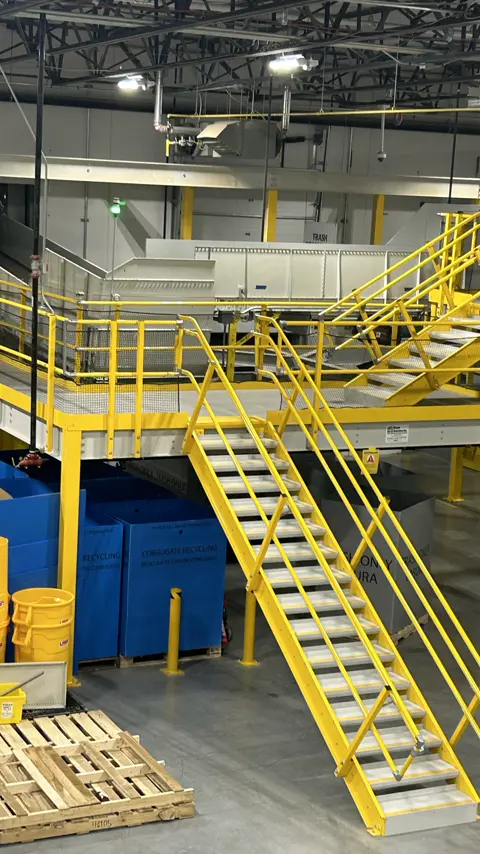
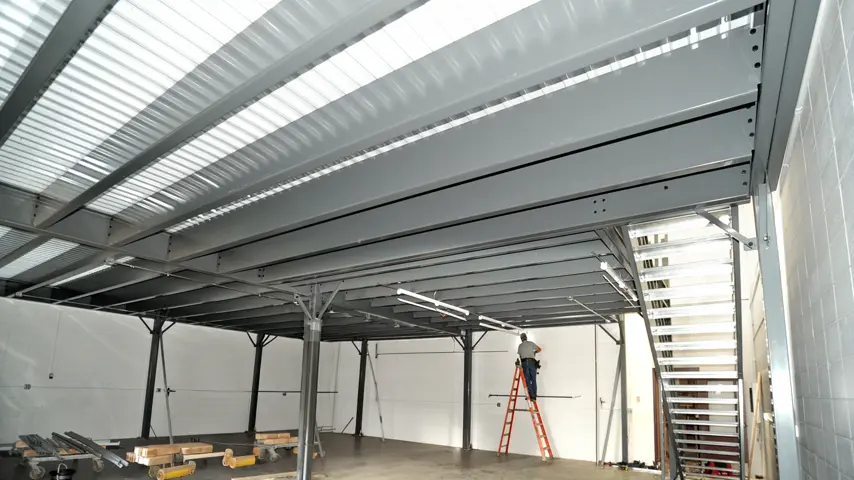
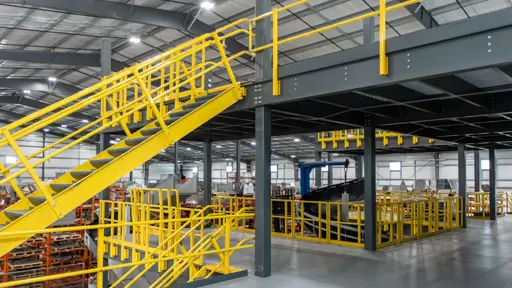
A mezzanine is a structural steel platform installed above existing floor-level operations to create additional usable square footage without relocating or expanding the building footprint. In warehouse and distribution applications, mezzanines are typically engineered between 8 and 20 feet off the floor and can span thousands of square feet — turning underutilized vertical space into productive work area or storage capacity.

Mezzanines are load-bearing structures designed to specific floor load ratings, typically ranging from 125 to 300+ PSF depending on application. They can be freestanding — independent of the building structure — or rack-supported, where the platform is integrated directly into a pallet rack system to maximize both vertical storage density and usable overhead space.

Common Applications

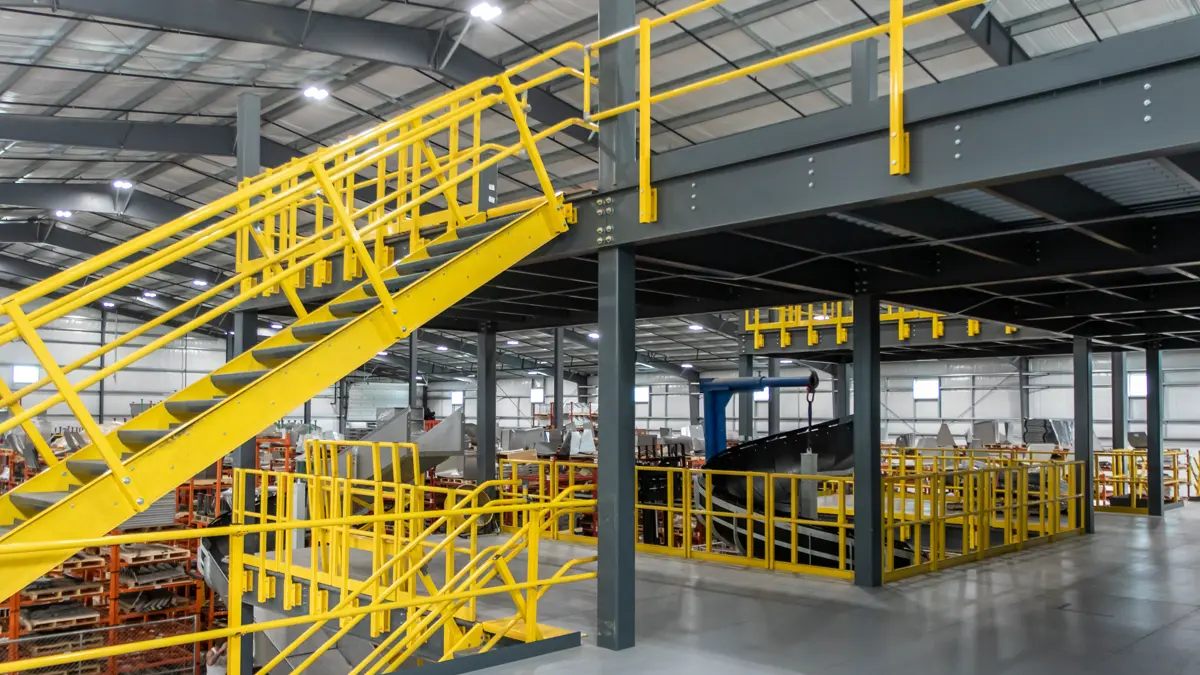
  • Pick module integration — Mezzanines provide the elevated levels required in multi-level pick module configurations, supporting conveyor lines, pick-to-light systems, and sortation equipment across two or more working floors within a single facility.
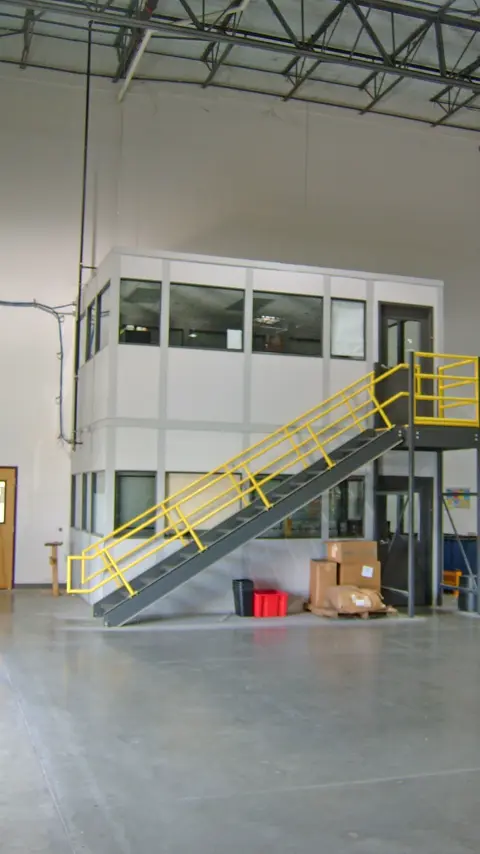
  • Office and workstation space — Administrative offices, quality control stations, and supervisor workstations built above active warehouse floor operations, keeping headcount off the floor without consuming dock or storage space.
  • Parts and reserve storage — Facilities with high SKU counts and mixed product sizes use mezzanines to segregate slow-moving reserve inventory from active pick locations at floor level, improving pick path efficiency without adding racking square footage.
  • Shipping and receiving support — Value-added services areas, returns processing, kitting, and repack operations positioned above inbound or outbound staging zones, with integrated conveyor drops connecting levels.
  • Rack-supported storage — Structural integration of mezzanine decking with pallet rack allows facilities to achieve storage at multiple levels while using the rack itself as the structural support system — reducing total steel requirements and installation cost compared to a freestanding platform.

SJF designs mezzanines as part of integrated storage and fulfillment systems — not as standalone structures. Platform sizing, column placement, stairway and gate locations, handrail configurations, and deck material are all specified around your material flow, equipment clearances, and operational requirements. SJF manages engineering drawings, stamped structural documents, and local permitting as part of the full-service project process.
Benefits & Features

  • Platform Height
    8 – 20 ft. (custom engineered to facility clearances)
  • Floor Load Capacity
    125 – 300+ PSF
  • Decking Options
    Bar grating, ResinDek, steel plate, or concrete-ready
  • Structure Type
    Freestanding or rack-supported
  • Cost vs. Expansion
    Typically half the cost of a building addition or facility relocation
  • Lease Flexibility
    Freestanding systems can be disassembled and relocated — no permanent modification to the building

Frequently Asked Questions

  • Does a warehouse mezzanine require a building permit?

    Yes — in virtually every U.S. jurisdiction. A mezzanine is classified as a new floor level within an existing structure, which triggers full building permit requirements including structural engineering, occupancy calculations, fire protection review, and egress compliance. This is separate from any high-pile storage permit the facility may already hold. SJF manages the full permitting process as part of every mezzanine project, including PE-stamped drawings and coordination with local building and fire authorities.

  • Will adding a mezzanine affect my facility's fire sprinkler system?

    Almost always, yes. The area underneath a mezzanine must maintain adequate sprinkler coverage, and adding a mezzanine changes the fire suppression dynamics of the building. Depending on your existing system layout and the size of the platform, new sprinkler heads may be required both above and below the deck. Under the IBC, a sprinklered facility can also increase the allowable mezzanine area from one-third to one-half of the room's floor area — a meaningful benefit for larger platforms. Sprinkler modifications typically require a separate sub-permit with a licensed fire protection contractor, which SJF coordinates as part of the project.

  • How much ceiling height do I need to install a mezzanine?

    A structure classified as a mezzanine requires a minimum of 7 feet of clear height beneath it. In practice, most warehouse mezzanine projects require significantly more — configurations that include office or workstation space typically need 18 to 20 feet of clear ceiling height to maintain adequate clearance below the platform and usable working height above. Clear height is measured to the lowest obstruction — sprinkler heads, HVAC ductwork, and lighting fixtures — not the roof deck. SJF conducts a full site assessment before system design to confirm clearances and identify any structural or mechanical conflicts.

  • What's the difference between a freestanding mezzanine and a rack-supported mezzanine?

    A freestanding mezzanine uses its own independent column and beam structure, anchored to the concrete slab, and is not connected to any racking system. It can span large areas with open clearance below and is the most flexible configuration for offices, pick modules, or general workstation space. A rack-supported mezzanine integrates the platform decking directly into a pallet rack structure, using the uprights as the primary support. This approach reduces total steel requirements and installation cost, and is well-suited for operations that need both elevated storage and ground-level rack storage in the same footprint. The right choice depends on your floor load rating, ceiling height, material flow requirements, and how the space below the platform needs to function.

  • Is there a limit to how large a warehouse mezzanine can be?

    Yes. Under the IBC, the total aggregate area of a mezzanine cannot exceed one-third of the floor area of the room or space in which it is installed — unless the facility has an automatic fire sprinkler system, in which case that limit increases to one-half. Exceeding these thresholds requires the structure to be classified as an additional building story, which carries significantly more extensive code requirements. Column placement, structural span, and egress path design all interact with the size limitations, which is why mezzanine sizing needs to be resolved during the engineering phase — not after equipment is on order.

Over 850 Five-Star Reviews & Counting!